
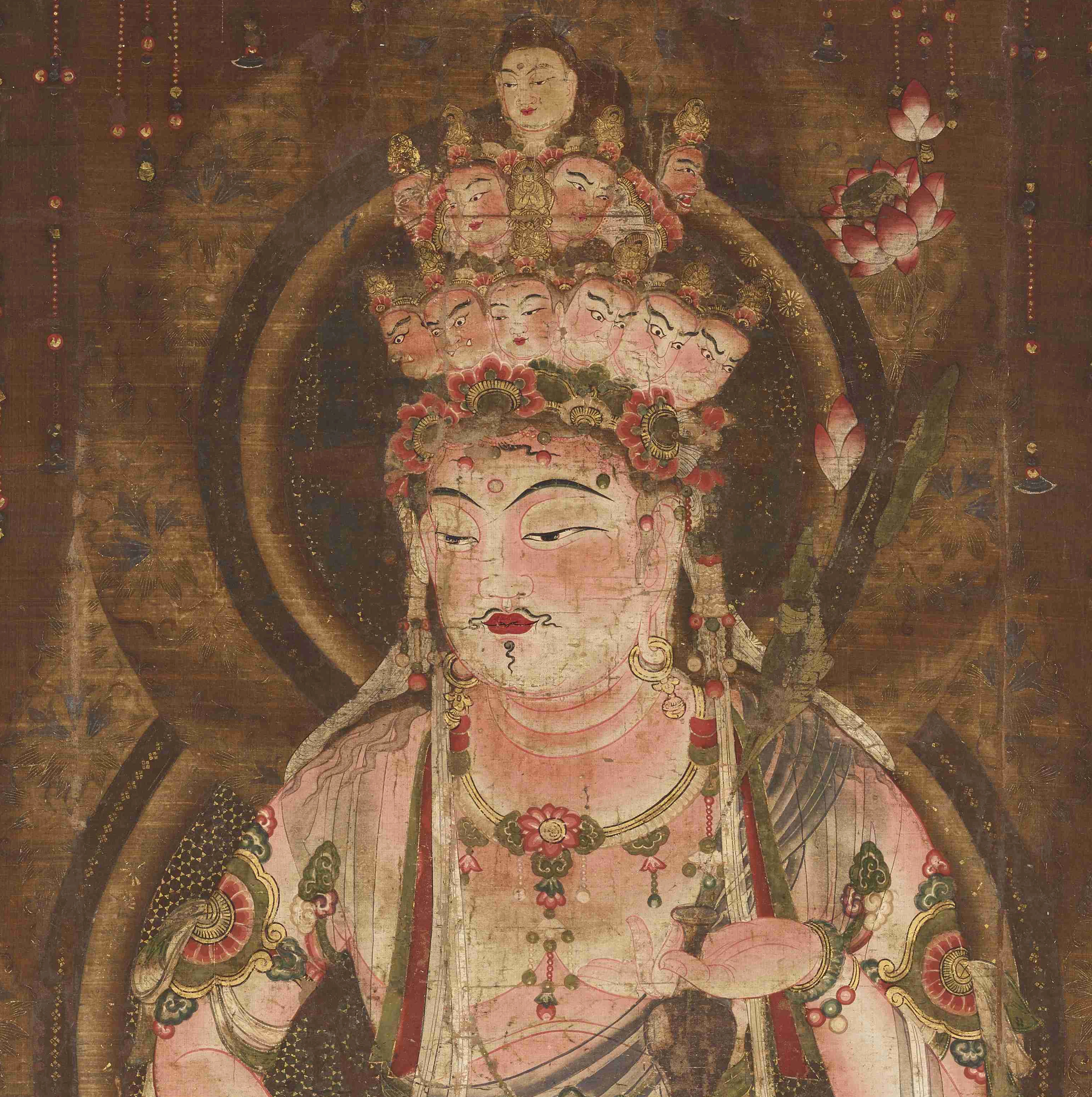
National Treasure: Eleven-headed Kannon (Jp. Jūichimen Kannon, Sk. Ekadaśamukha) (detail)
Heian period, 12th century | Nara National Museum
Greeting
In Nara—once known as “Nanto” (lit. the Southern Capital)—a rich tradition of exquisite Buddhist paintings has been continuously passed down since ancient times. These treasured works are collectively known as Buddhist paintings of Nara (Jp. Nanto butsuga). During the Nara period (710–794), major temples were adorned with richly cosmopolitan Tenpyō paintings that would serve as a model for generations to come. By the Heian period (794–1185), elegant Buddhist paintings suited to aristocratic tastes were widely venerated. From the Kamakura period (1192–1333) onwards, which marked the revival of Buddhist paintings of Nara, artists began producing revivalist works based on Tenpyō iconography. At the same time, Buddhist painters affiliated with the Nara-based painting ateliers (Jp. Nanto edokoro) became actively involved not only in the production of Buddhist paintings and illustrated handscrolls, but also in the decorative coloring of Buddhist sculptures. Since the modern era, Buddhist paintings from Nara’s Tenpyō era became highly acclaimed as the classics of Japanese art and continue to inspire new works of Japanese paintings while remain protected as objects of cultural property.
This exhibition is an international collaborative project realized after nearly two decades of planning between the Museum of Fine Arts, Boston in the United States and the Nara National Museum in Japan. It marks the first attempt to trace the history of Buddhist paintings of Nara through an exceptional gathering of works, featuring the long-awaited homecoming of outstanding Buddhist paintings associated with Nara from the collection of the Museum of Fine Arts, Boston, alongside a careful selection of Buddhist paintings and sculpture from Japan, including works from the Nara National Museum. Moreover, the murals in the Kondō Hall of Hōryūji Temple lost in the fire of 1949 (Shōwa 24) are revived to their original brilliance with the latest digital technologies using the color information recorded in glass photographic plates. The first public appearance of these high-definition color images of the murals is another major highlight. We invite you to fully immerse yourself in the rich and distinctive appeal of Buddhist paintings of Nara, an experience available only in this exhibition.
OVERVIEW
- Dates
-
Saturday, July 18th to Sunday, September 13th, 2026
First Rotation: Saturday, July 18th to Sunday, August 16th
Second Rotation: Tuesday, August 18th to Sunday, September 13th*Please note that some works will be rotated during the exhibition period.
**Exhibited works and exhibition dates are subject to change due to unforeseen circumstances.The museum is closed on Mondays* and Tuesday, July 21st
*Except for Mondays, July 20th and August 10th, 2026.
- Hours
-
9:30 A.M. to 5:00 P.M.
*Open until 7:00 P.M. on Saturdays
*Open until 6:00 P.M between Wednesday, August 5th to Friday, August 7th, and between Sunday, August 9th to Friday, August 14th, 2026
*Last entry is thirty minutes before closing. - Venue
-
The East and West New Wings of the Nara National Museum
- Organizers
- The Nara National Museum, Japan Broadcasting Corporation (NHK) Nara Station, NHK Enterprises, Inc. Osaka Branch Office, The Asahi Shimbun
- With the Special Cooperation of
- The Museum of Fine Arts, Boston
- With the Special Sponsorship of
- KINDEN CORPORATION,DAIKIN INDUSTRIES, LTD.,TAKENAKA CORPORATION,The Nanto Bank, Ltd.,Nissha Co., Ltd.
- With the Cooperation of
- Japan Airlines,FUJIFILM Corporation,Bukkyō Bijutsu Kyōkai (Buddhist Art Foundation)
- Through Corporate Partnership with
- DMG MORI Co., Ltd.
Admission Fees
| 区分 | Same-Day Tickets | Advance Tickets Group Tickets |
|---|---|---|
| General Admission | 2,200 yen | 2,000 yen |
| High School and University Students | 1,500 yen | 1,300 yen |
* Free of charge to middle school students and younger.
* Groups must have twenty or more people to receive the discounted admission.
* For university and high school students, please bring your student ID.
* For those qualified for free of charge entry, please bring related certificates.
* Free of charge entry to disabled certificate holders and an accompanying caretaker (upon presenting the certificate).
* Admission includes entry to the Exhibitions from the Permanent Collection “Masterpieces of Buddhist Sculpture” (Buddhist Sculpture Hall) and “Chinese Ancient Ritual Bronzes” (Ritual Bronzes Gallery).
* Members of the Nara National Museum Campus Members program may purchase same-day tickets for 400 yen (students) or 2,100 yen (faculty/staff). Please present your student or staff ID at the ticket counter.
Tickets
| Official Website | Purchase here (opens the official exhibition online ticket purchase page) |
|---|---|
| LAWSON TICKET code: 55521 | Purchase here (opens the Lawson Ticket purchase page) |
| SEVEN TICKET code: 114-964 | Purchase here (opens the Seven Ticket purchase page) |
| Nara National Museum | (No online purchase button in this row) |
| The following stations of Kintetsu Railway; Osaka-Namba, Osaka-Uehonmachi, Kyoto, Osaka-Abenobashi, Kintetsu-Nagoya, Kintetsu-Yokkaichi, Shirako, Tsu, Ise-Nakagawa, Ujiyamada, Toba | (No online purchase button in this row) |
Featured Works
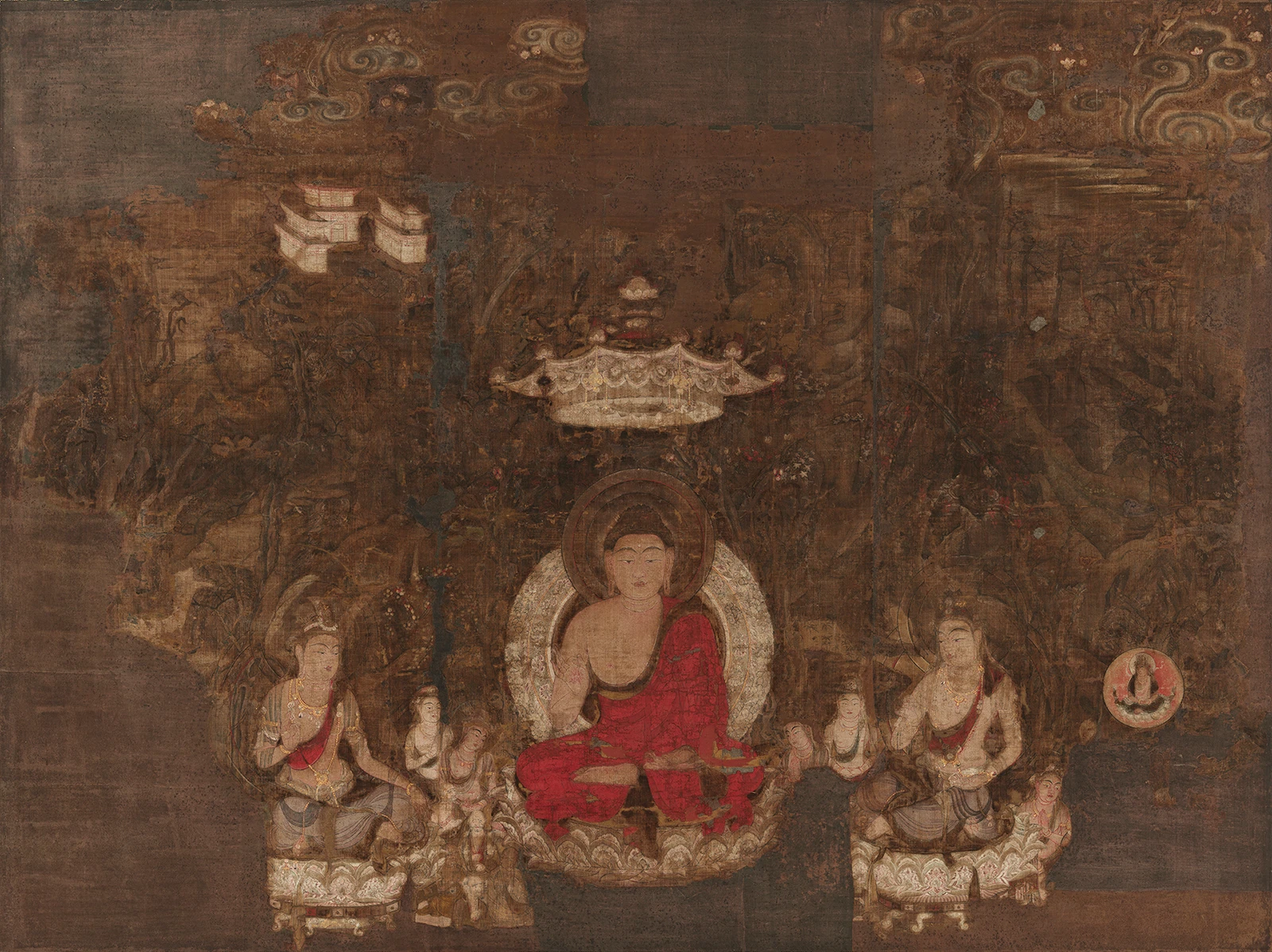
Shaka, the Historical Buddha, Preaching on Vulture Peak(also known as Hokkedō konpon mandara)
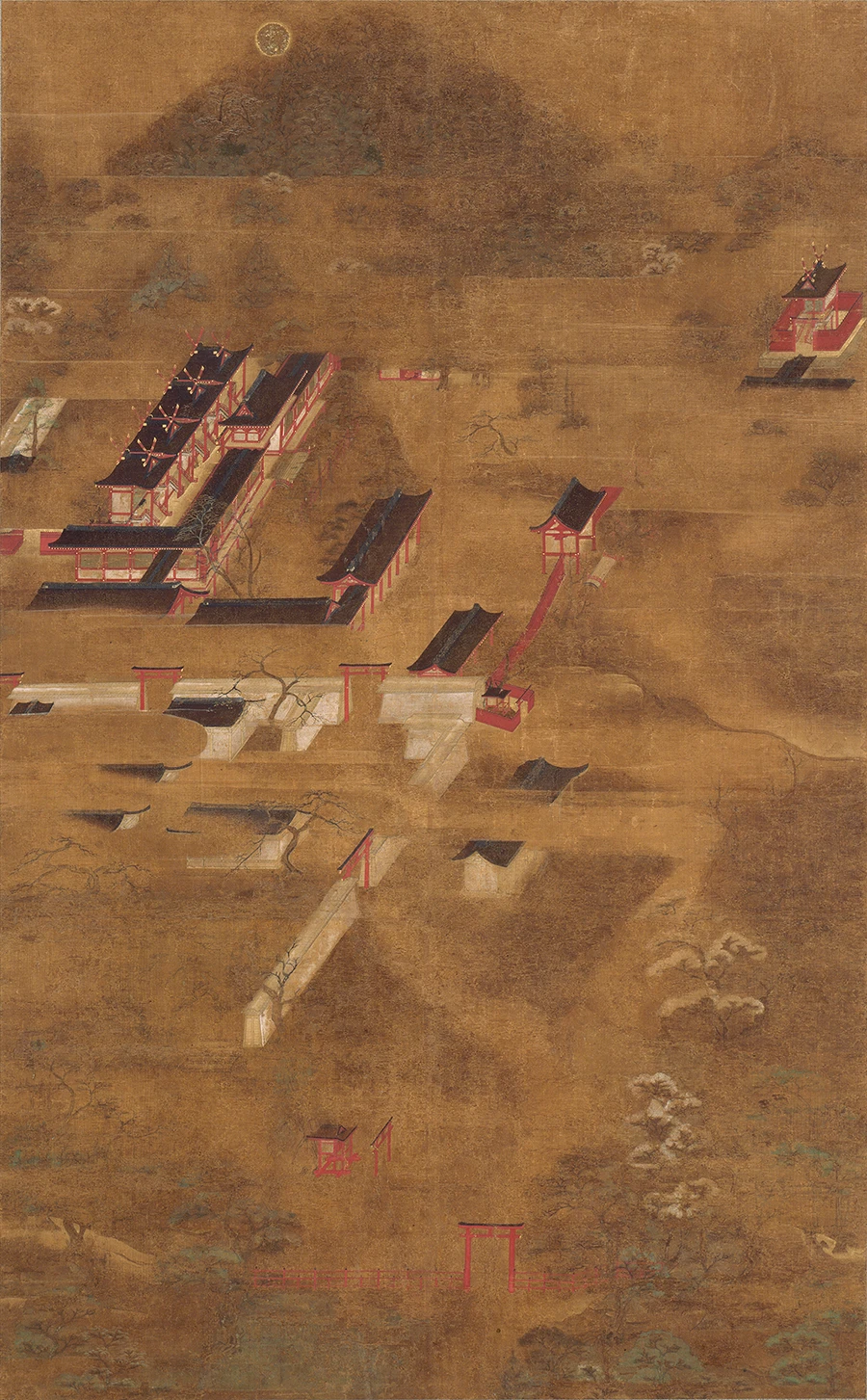
Mandala of Kasuga Shrine
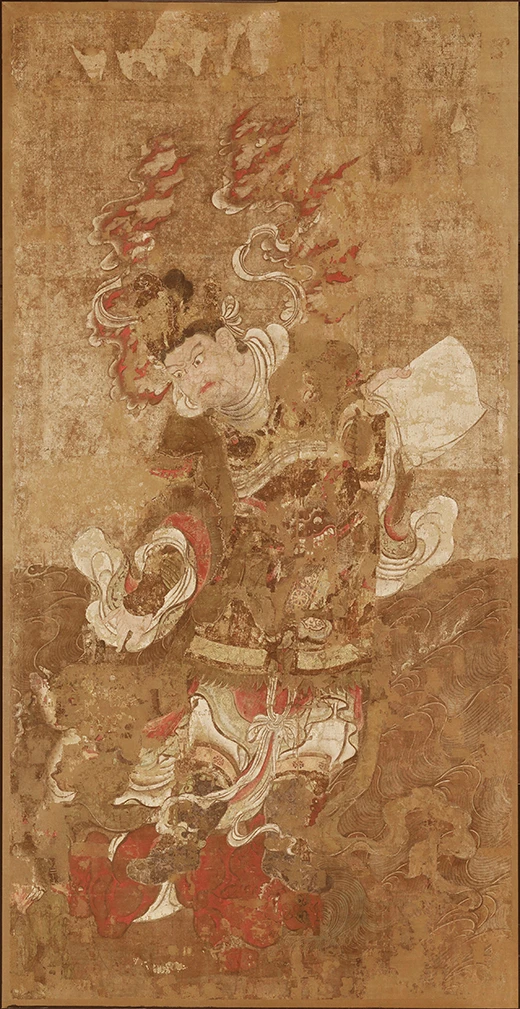
Four Guardian Kings(Kōmokuten, the Guardian of the West)
By Chōmyō
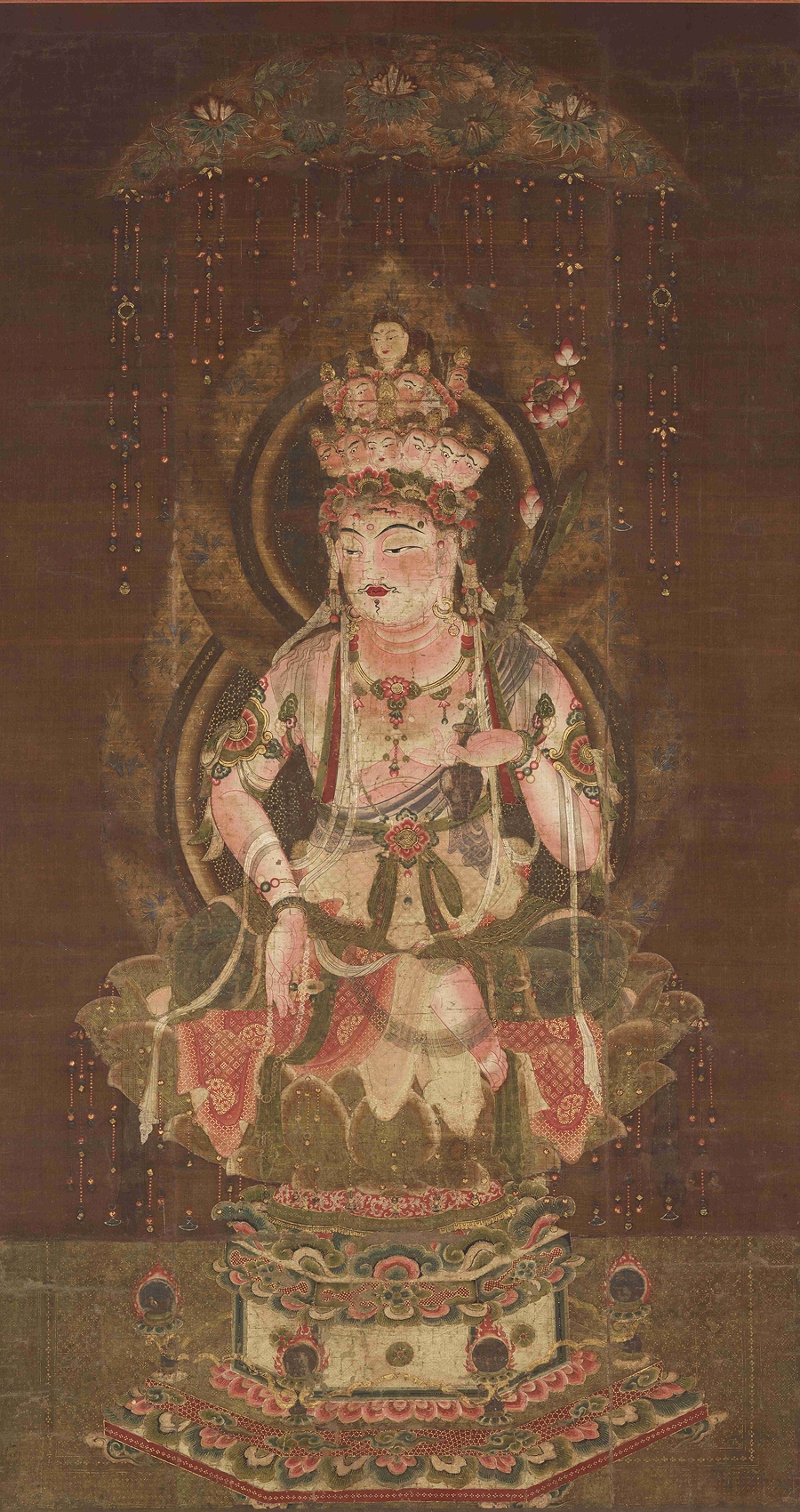
National Treasure
Eleven-headed Kannon(Jp. Jūichimen Kannon, Sk. Ekadaśamukha)
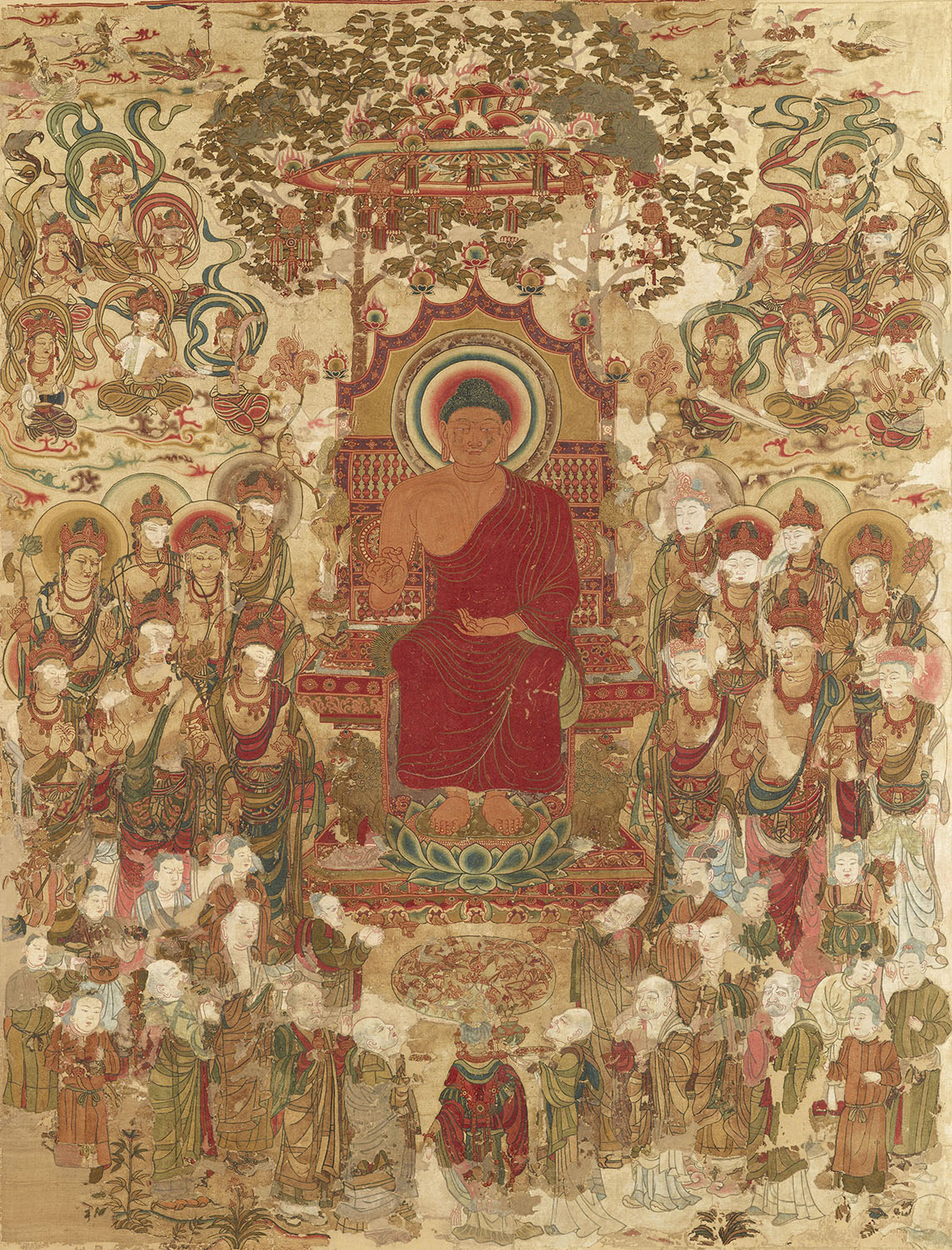
National Treasure
Embroidery of the Shaka Nyorai (Sk. Śākyamuni) Preaching
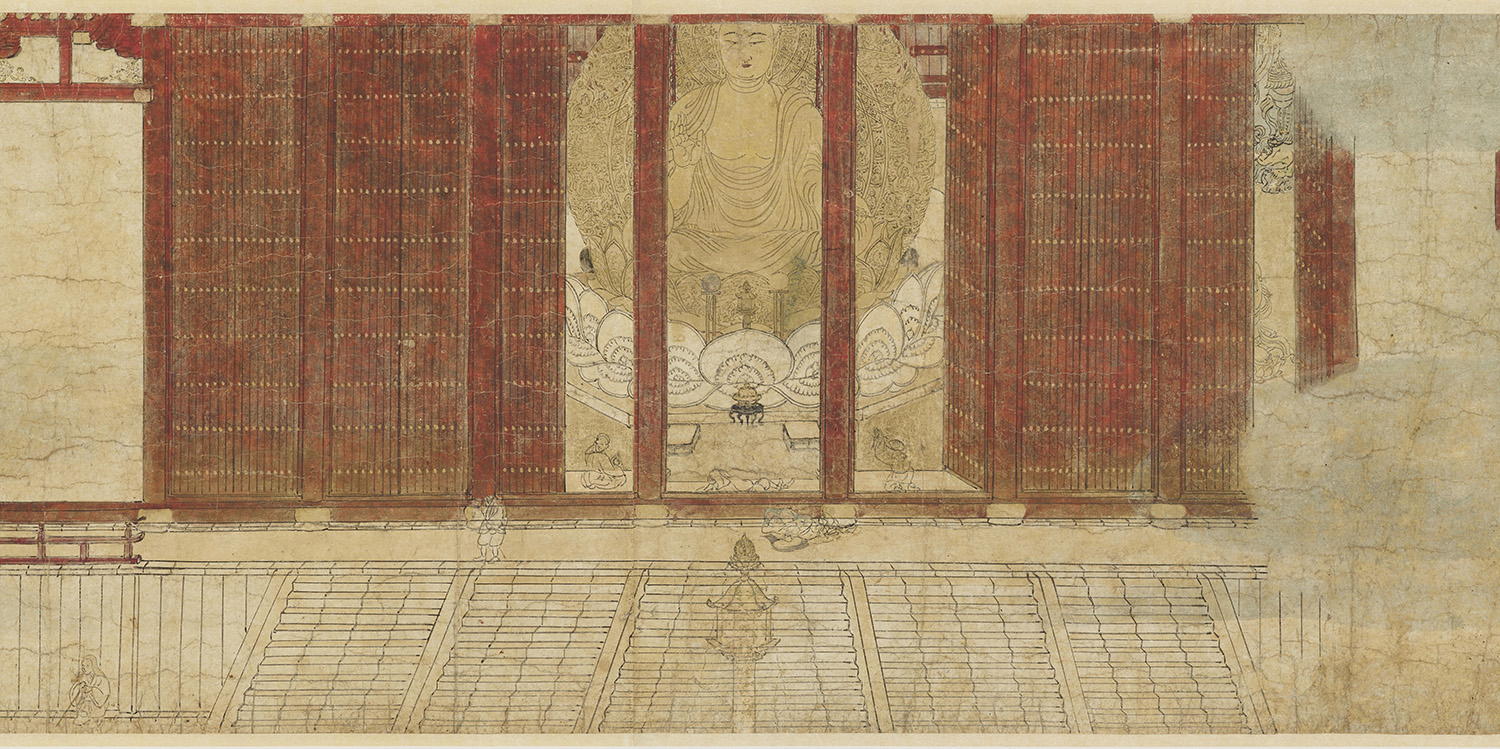
National Treasure